Home / Roof Repair
Roof Repair
Roof repair for homes in Tarrant County, Johnson County, and Weatherford: finding the source of a leak, repairing shingles and flashing, and covering storm damage until a permanent fix is done.
How an inspection finds the leak source
The spot where water appears inside is rarely the spot where it gets in. Water can enter at a vent or flashing seam, travel along a rafter or the top of the decking, and show up on a ceiling far from where it started. A useful inspection works backward from the evidence.
- Interior: the location, size, and timing of stains. A stain that only appears with wind from one direction points to a different cause than one that appears after every rain.
- Attic: water trails on rafters, dark or soft decking, rusted nail tips, and damp insulation, which usually point uphill toward the entry.
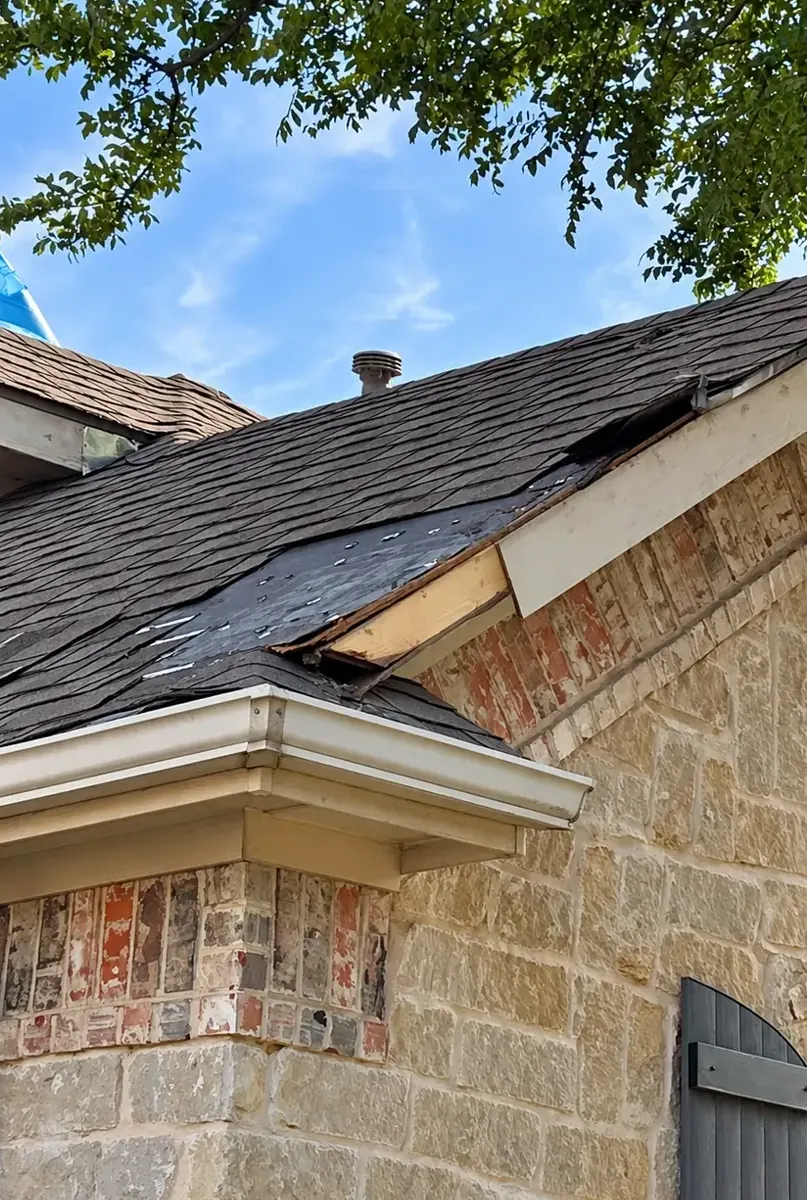
- Roof surface: pipe boots, flashing at walls and chimneys, valleys, skylight curbs, ridge caps, and any lifted, cracked, or missing shingles along the path.
- Confirmation: when the cause is unclear, a controlled water test on one area at a time can confirm it before any repair is made.
Findings are photographed so you can see the problem yourself.
What roof repairs include
Leaks
Fixing the specific detail that lets water in, then checking the decking and underlayment around it.
Missing or lifted shingles
Removing damaged pieces, repairing the underlayment, and installing matching shingles that are nailed and sealed to bond with the surrounding courses.
Flashing
Repairing or rebuilding step flashing, counterflashing, chimney flashing, skylight flashing, and valley metal where it has rusted, loosened, or been covered with failing sealant.
Pipe boots and roof vents
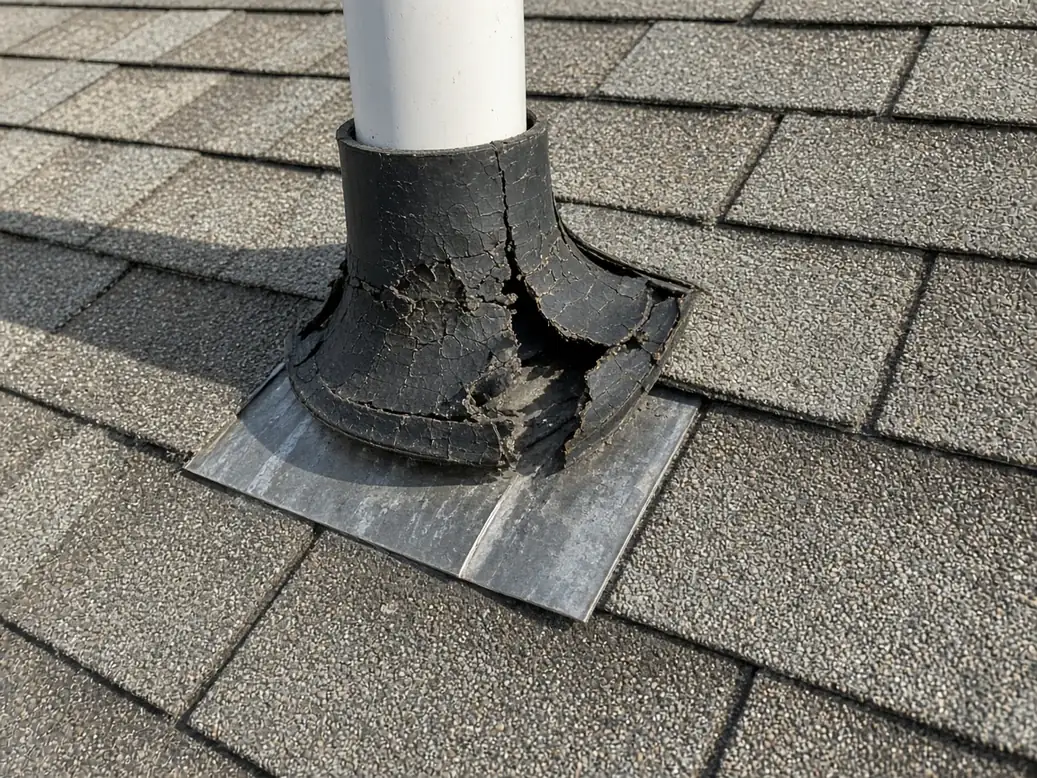
Swapping cracked rubber boots around plumbing vents and resecuring or resealing exhaust vents and turbines.
Ridge cap
Reinstalling ridge and hip caps that cracked or blew off, which protect the highest seams on the roof.
Small section repairs
Rebuilding a limited area of decking and shingles damaged by a limb, wind, or a long-term leak.
Emergency drying-in and tarping
Covering an open or leaking area with underlayment or a fastened tarp so the house stays dry until the permanent repair is completed. See emergency roof repair for how urgent requests are handled.
Common causes in North Texas
Hail fractures shingle mats and strips granules. Bruising may not leak right away, but it shortens the life of the affected shingles. A hail damage roof repair focuses on the slopes and components that were actually hit.
Wind breaks shingle seal strips, folds tabs, and removes ridge caps. Homes on open lots or at the edge of a subdivision tend to see more of it. A storm damage roof repair restores the torn areas and checks the edges and caps.
Heat dries out rubber boots, sealants, and shingles, especially on south- and west-facing slopes. Many leaks in older homes trace back to sun-damaged details rather than a single storm.
Trees clog valleys and gutters with debris, keep shingles damp after rain, and can puncture decking in high wind.
What a repair does not include
- Tearing off and reroofing the entire house
- Interior drywall, paint, or insulation work, which is noted but handled separately
- Gutter installation or full gutter systems, beyond reattaching sections damaged with the roof
- Structural framing changes, solar panel work, or attic ventilation redesign
If the roof is past repair. When shingles are failing across most slopes or decking damage is widespread, a patch will not last. You will get a detailed estimate for your property explaining what was found, and you may need a replacement from a roofing contractor.
Roof repair by city
The full list is on the service areas page, and the steps are explained on how it works.
Request a roof repair inspection
Note the type of repair you think you need and where on the house it is. If you are not sure, describe what you see. Questions first? Call or text (972) 784-8964.