Home / Emergency Roof Repair
Emergency Roof Repair
When water is coming through the ceiling or a storm has torn open part of the roof, the first goal is to stop more water from getting in. Emergency roof repair covers leak response, tarping and drying-in, and the follow-up repair that makes the fix permanent.
How emergency roof repair requests work
You can submit a request on this site at any time of day, including nights and weekends. Each request is passed to an independent local roofing contractor who handles emergency roof repair in your area. The contractor reaches out to confirm the details, asks what you are seeing inside and outside, and sets a time to look at the roof. Scheduling depends on weather, safety, and how many homes in the area were affected by the same storm, so this site does not promise a specific arrival time.
When you fill out the form, describe where water is showing up, which side of the house took the damage, and whether you can see missing shingles or a hole from the ground.
If you are searching for 24 hour emergency roof repair, the request form is the fastest way to reach a contractor. It stays open around the clock, even when an office is closed.
Leak response: finding where the water enters
Water rarely comes through the ceiling directly below the opening in the roof. It runs along decking, rafters, and the top of drywall before it drips. A leak response starts in the attic when it is safe to enter, tracing stains and wet insulation back toward the high point where water is getting in. From the roof side, the contractor looks at the area above that point for torn shingles, open flashing, a split pipe boot, or a damaged ridge.
The aim of the first visit is to stop active water. That may mean a temporary seal over a cracked boot, a section of underlayment over a torn area, or a full tarp when the opening is larger.
Tarping and emergency drying-in
Drying-in means covering the damaged area so rain cannot reach the decking or the inside of the house. On a small area, that can be synthetic underlayment fastened under the surrounding shingles. On a larger area, a heavy tarp is stretched over the ridge or past the damage and held down with wood battens screwed through the tarp, so wind cannot get under it and peel it back.
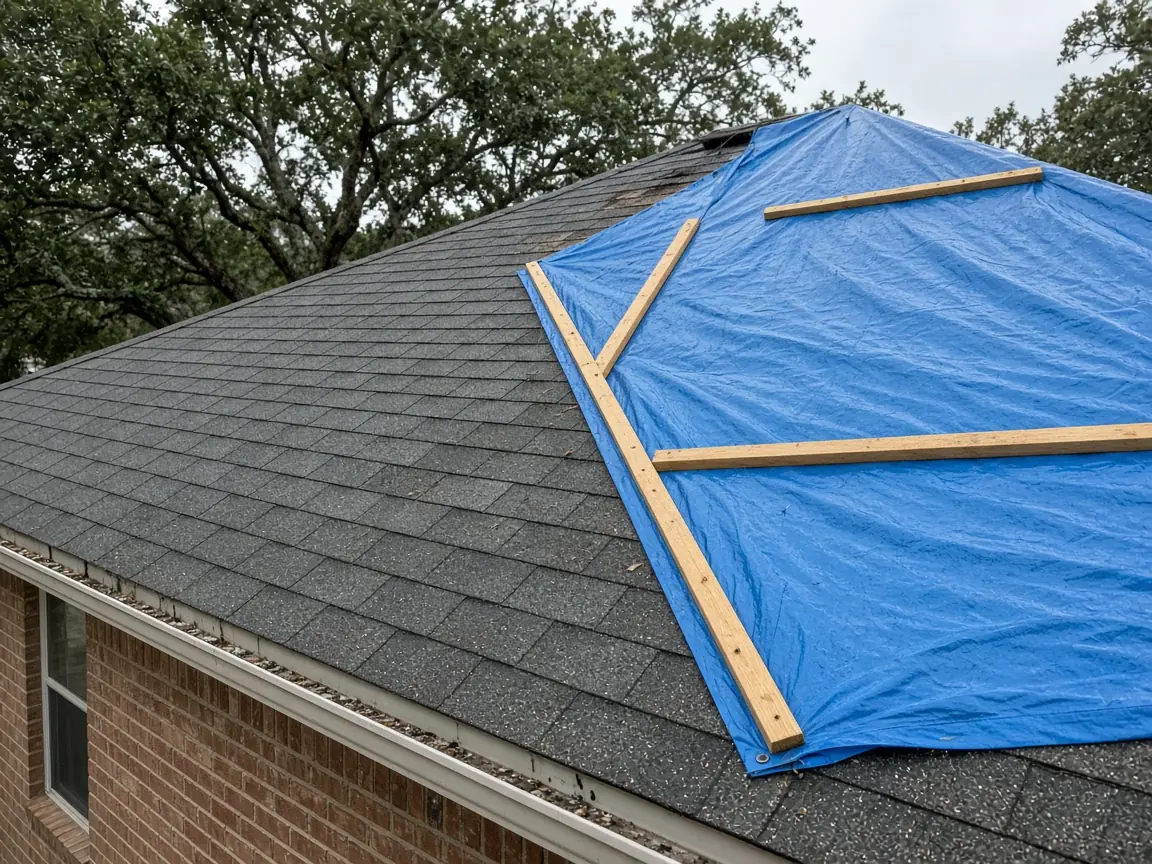
A well-installed tarp extends past the damaged area on every side and runs over the ridge when possible, so water sheds over the top instead of running under it. It is a temporary measure. Tarps break down in Texas sun and wind, and the fasteners leave holes that must be addressed during the permanent repair.
Common emergency repairs
Lifted or missing shingles after wind
Strong wind can break the seal strip on a row of shingles, fold the tabs back, or pull shingles off entirely. Exposed nail heads and bare underlayment let water in quickly. The emergency step is to cover the exposed area. The repair step is to replace the missing shingles, reseal lifted tabs that are still sound, and check nearby rows for creases that will fail in the next storm.
Flashing, pipe boots, and ridge cap
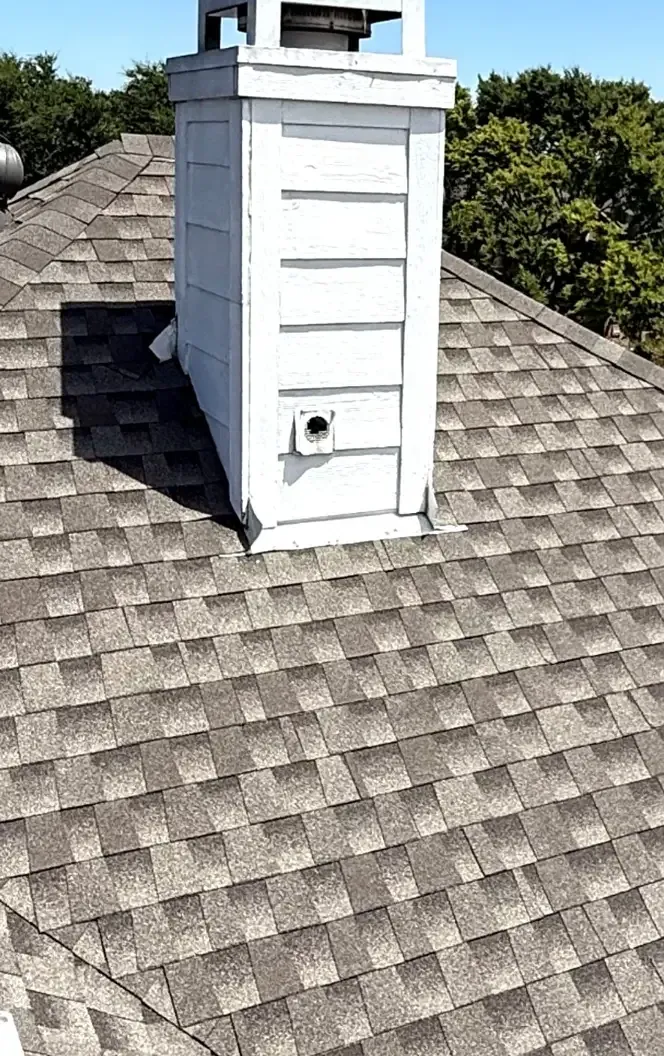
Flashing around chimneys, walls, and skylights can pull loose or bend in high wind. Rubber pipe boots around plumbing vents crack after years of heat and then leak during heavy rain. Ridge cap shingles sit at the highest and most exposed point of the roof and can blow off in a single gust. Each of these can be sealed temporarily and then repaired properly with new metal, a new boot, or new cap shingles.
Small section repairs
A fallen limb or a long-running leak can damage a limited area of decking. Once the area is dry, the contractor removes the shingles and underlayment around it, replaces the soft or broken decking, and rebuilds the section with matching shingles where possible.
What happens after the drying-in
- Inspection once the roof is dry. The contractor returns to look at the full roof, not only the damaged spot, and photographs what was found.
- A detailed estimate for your property. You receive a written scope that lists the repair, the materials, and the project total before any permanent work begins.
- Permanent roof repair. The tarp comes off, fastener holes are sealed or the affected shingles replaced, and the damaged area is rebuilt.
- Final check. Flashing, boots, and ridge in the repaired area are checked again so the roof is watertight.
Once you approve the scope, let’s get your project scheduled. If you are filing an insurance claim, the photos and written scope from the inspection are useful to keep with your records.
Protecting the interior in the meantime
- Move furniture, rugs, and electronics away from the wet area and set out buckets or towels to catch drips.
- If a ceiling is bulging with water, keep people out from under it. A small hole made at the lowest point with a screwdriver can let water drain into a bucket in a controlled way.
- Turn off power to any light fixture or ceiling fan where water is showing.
- Take photos of the damage inside and outside for your records.
- Stay off the roof. Wet shingles and storm debris are slippery, and a damaged deck may not hold weight.
Wet attic insulation holds moisture against drywall and framing. After the leak is stopped, ask the contractor to note any insulation or drywall that should be dried or replaced by the appropriate trade.
If the roof is past repair. When damage is spread across most slopes, a patch will not hold for long. You should get a detailed estimate for your property and may need a replacement from a roofing contractor.
Emergency roof repair near you
Requests come from across the service area. Learn more about local conditions on the emergency roof leak repair Fort Worth page, roof leak repair in Arlington, roof repair in Burleson, and emergency roof repair in Crowley. For non-urgent work, see the full roof repair page or the list of service areas.
Request emergency roof repair
Tell us where water is coming in and what you can see from the ground. Your request is passed to an independent local roofing contractor. To talk it through, call or text (972) 784-8964.